
-
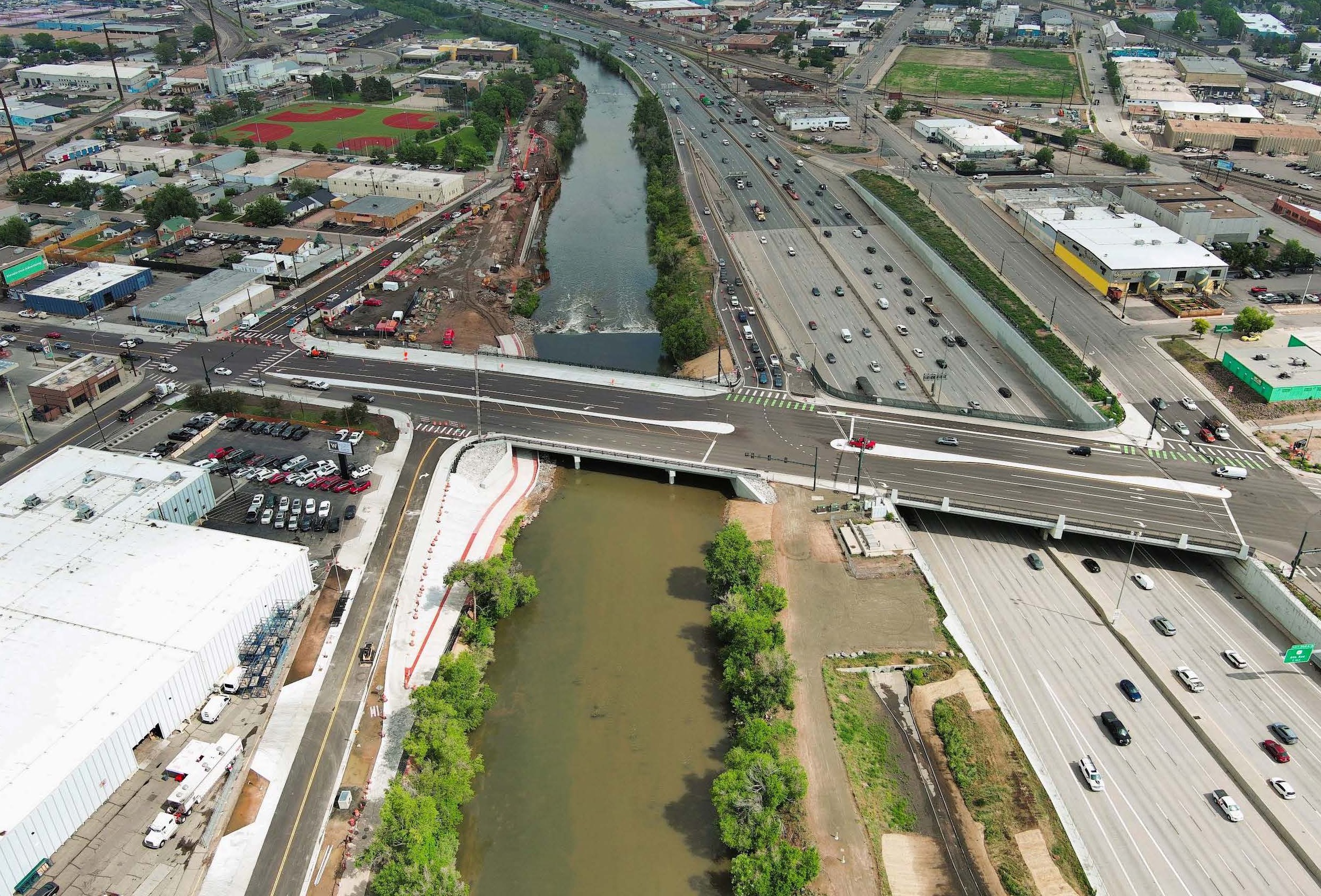 The new Alameda bridge and trail system as seen from above.
-
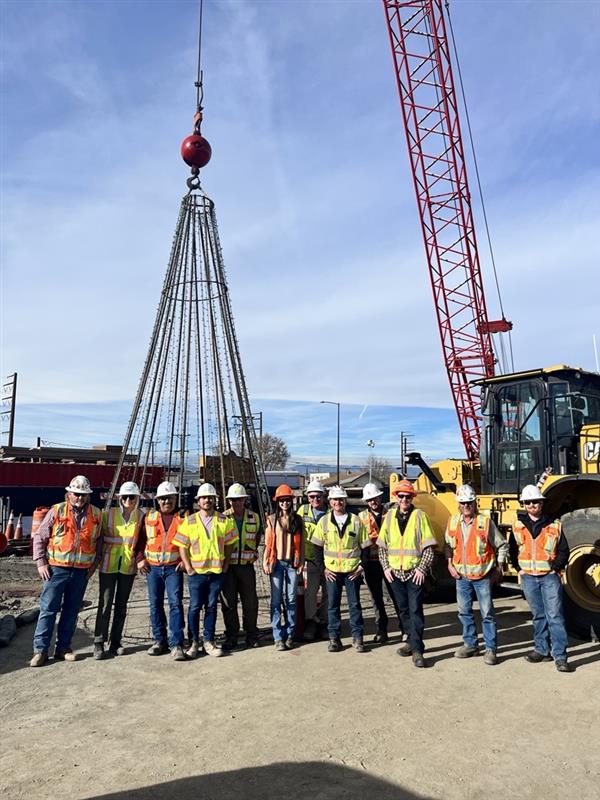 Construction crews celebrate the holidays with a rebar Christmas tree.
-
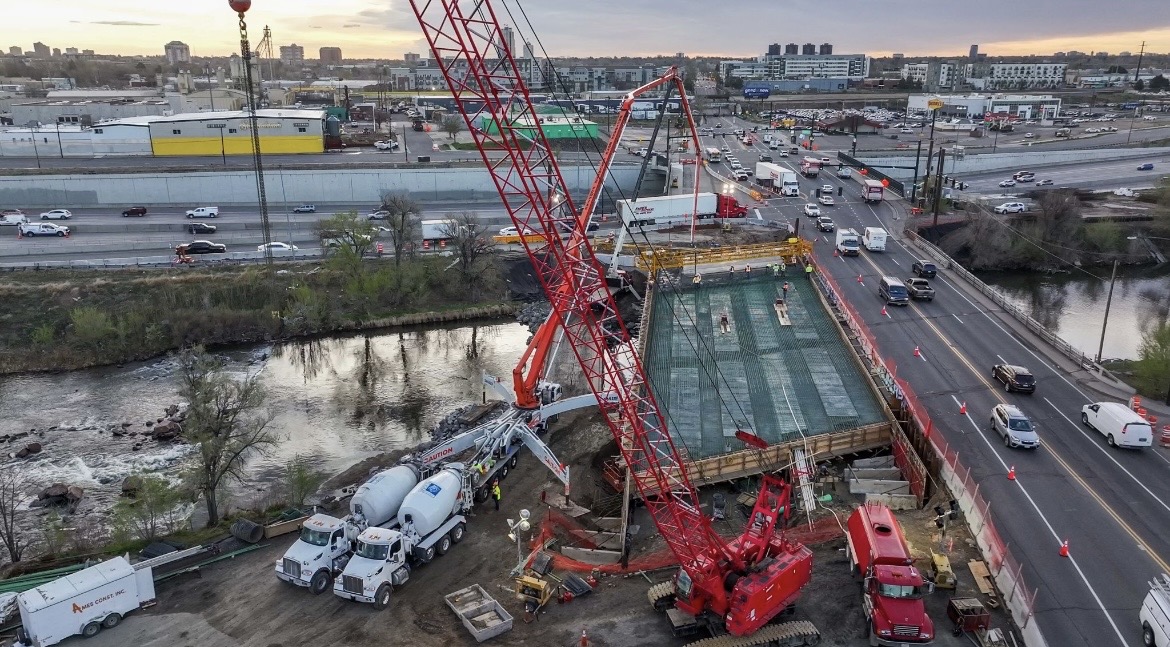 Deck pour on the new bridge with Ames Construction.
-
Alameda Bridge Over South Platte River
Dating to 1911, the Alameda Avenue bridge over the South Platte River was the oldest bridge on the Colorado state highway system. A 1966 widening extended its service life, but the aging structure no longer met modern demands for safety, flood capacity, or multi-modal travel. Replacing it meant building over one of the state’s major waterways in the dense Alameda Avenue and I-25 corridor. Heavy traffic, a busy regional trail, a national fiber trunk line, and adjacent City and County of Denver projects all required careful management.
Wilson & Company provided construction management that advanced the project through five phases and twelve subphases. The critical relocation of the Lumen national trunk line and the reconstruction of key connections drove the project sequence. The team built a collaborative, solutions-driven environment that brought together CDOT, the contractor, the City and County of Denver, and multiple stakeholders with competing priorities. Strong relationships with the client and contractor enabled timely decisions on utility conflicts, traffic management, and coordination with adjacent city-owned projects.
To keep traffic moving safely, the team reviewed and approved more than 45 Method of Handling Traffic (MHT) plans. Working with CDOT Region 1 Traffic, the team secured two full weekend closures: one for the 2023 bridge demolition and one for the 2025 final paving, signals, and striping. Each closure included robust media outreach and detour coordination to keep the public informed. Wilson & Company and its subconsultants continuously monitored and adjusted detour routes, especially along the heavily used South Platte River Trail.
Environmental stewardship guided every critical phase of work. To keep debris and contaminants out of the river during demolition, the team installed temporary scaffolding beneath demolition activities each day. The system captured concrete debris for proper disposal and eliminated the risk of waterway contamination. This approach required more labor and time than traditional demolition methods, but it protected the South Platte River and maintained strict environmental compliance.
The new bridge delivers multi-modal improvements for drivers, cyclists, and pedestrians, along with increased safety and flood capacity. Improved water quality infrastructure and enhanced connectivity provide long-term environmental benefits and support sustainable transportation options for the community.