
-
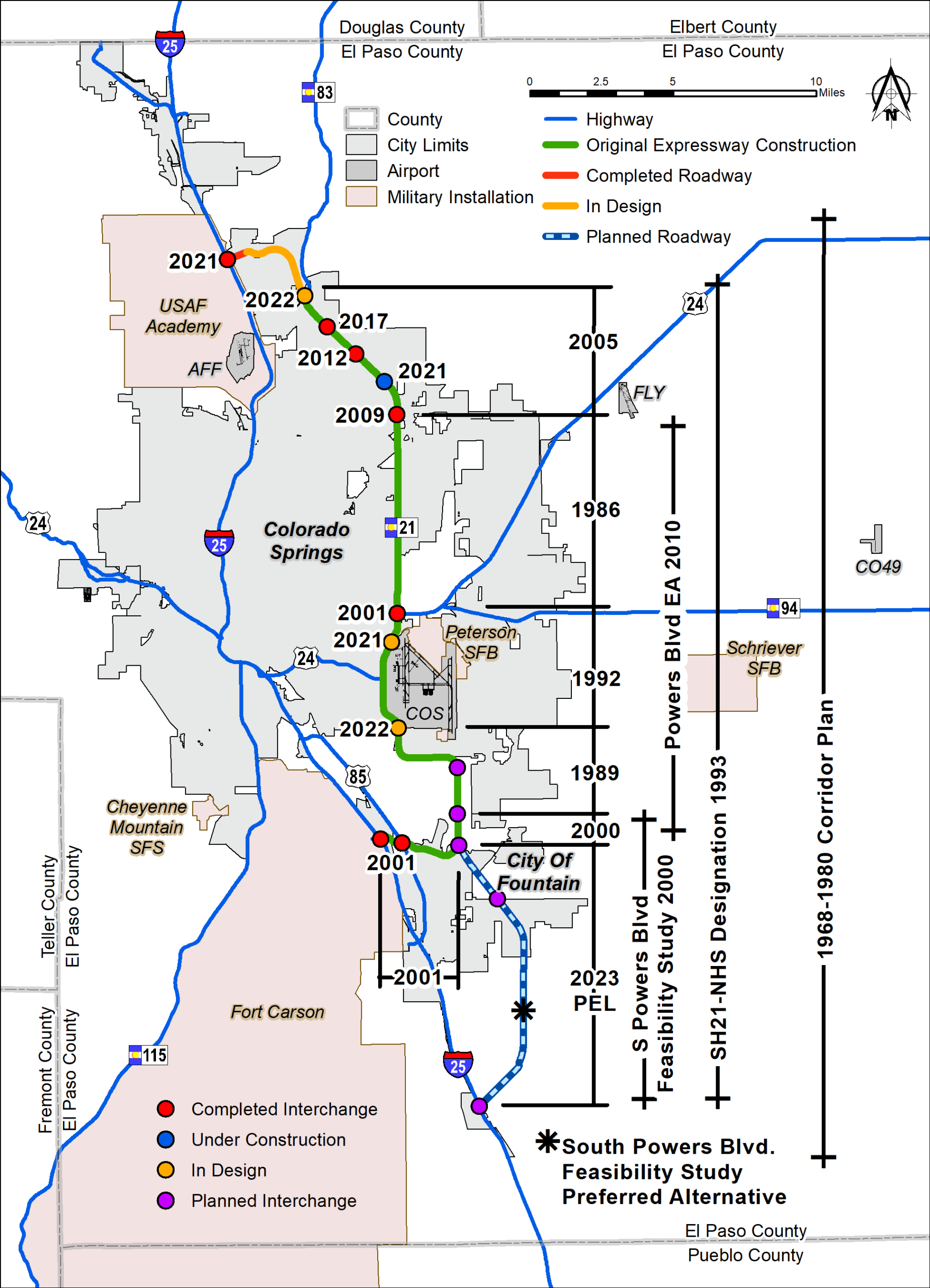
 Power Boulevard corridor development.
-
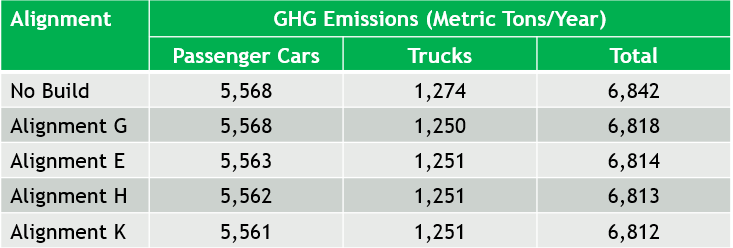
 Greenhouse gas emissions for each alternative.
-
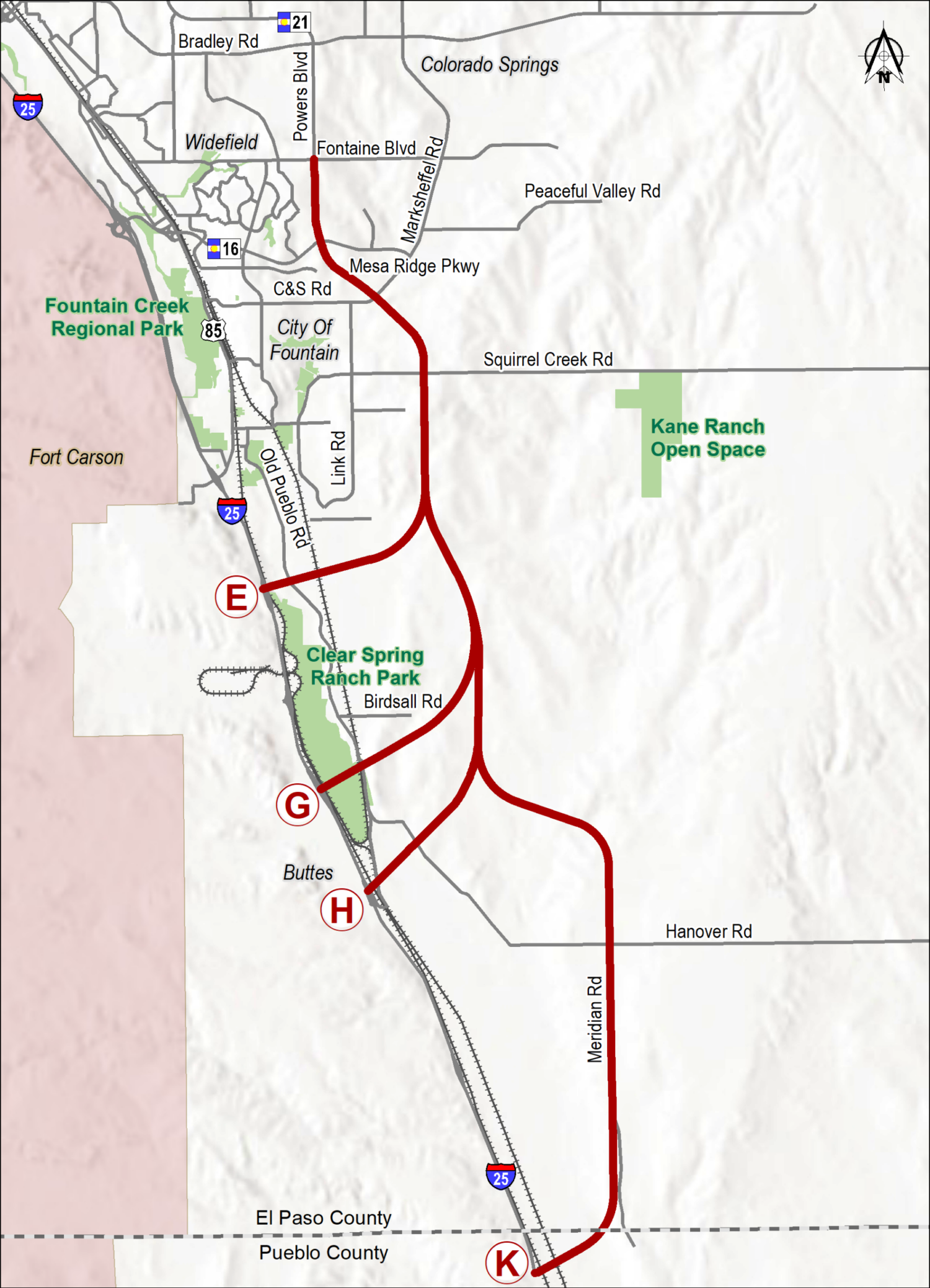
 Powers Boulevard alignment alternatives.
Powers Boulevard South PEL Study
Wilson & Company led a Planning and Environmental Linkage (PEL) study to extend Powers Boulevard (CO-21) south to an I-25 connection south of the City of Fountain. The extension has been planned for nearly forty years and, when implemented, will improve regional mobility, expedite military deployments and emergency responses, and enhance freight connectivity.
Outcomes of the study included: 1) a recommended alignment for the southernmost segment of Powers Boulevard, 2) a typical roadway section, and 3) an Access Control Plan to preserve controlled access to a future freeway-class facility. The study defined future implementation phasing and next steps to achieve the vision for Powers Boulevard as a fully integrated multimodal corridor. Together, the study deliverables will be used to preserve the corridor and to support right-of-way acquisition through the local jurisdiction development review and approval process. The approved PEL provides a streamlined foundation for preparing NEPA documentation (Categorical Exclusion or Environmental Assessment) for identified implementation phases once funding becomes available for corridor improvements implementation.
To support the study, Wilson & Company prepared travel demand forecasts for a 2045 planning horizon using the Pikes Peak Area Council of Governments (PPACG) travel model to evaluate the baseline PPACG fiscally constrained plan network and an enhanced network that included approved development roadways and land use densities within the study corridor travel shed. The PPACG model was also used to evaluate Vehicle Miles Traveled (VMT), Vehicle Hours Traveled (VHT), out-of-direction travel, emergency response times, and network criticality and security/resiliency to support alternatives screening. Traffic counts were collected and used, along with StreetLight Data, as input to FREEEVAL and Synchro/SimTraffic-based traffic operations analysis. EPA/FHWA-prescribed models and methodology were also used to evaluate GHG emissions of alternative alignments and to conduct air quality and noise modeling.
The PEL study was approved by FHWA and supported by robust stakeholder engagement and public outreach. The communications program was intentionally multi-dimensional, engaging stakeholders with varying levels of interest through standing committees, one-on-one and focus group engagement, and hybrid public meetings to support open and informed input to the planning process.